Foundation & Anchor Bolts
S R Forgings manufactures foundation and anchor bolts at Focal Point, Ludhiana — J, L, U, eye-end and straight anchor rods, and welded plate assemblies built complete with base plate, gussets, pipe sleeve and tuck nut. Made to your drawing or to the standard named in the specification, in mild steel and in property classes 8.8 and 10.9.
Types of foundation bolt we make
Each type transfers load into the concrete in a different way. The short descriptions below cover what we make; the reasoning behind each is in our article on the types of foundation bolts and where each is used.
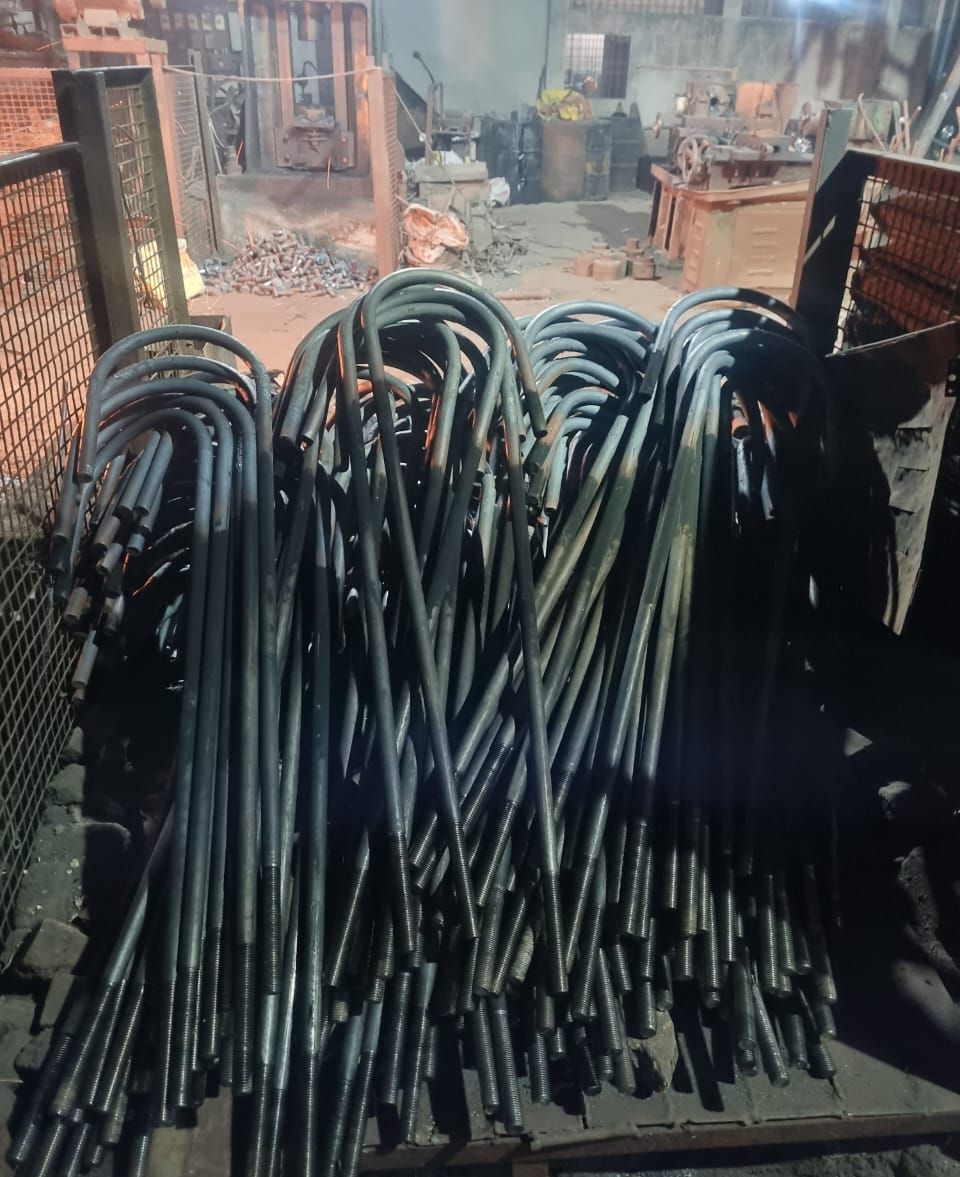
J type foundation bolts
Threaded at one end with a curved hook at the other. Used for column bases, light machinery and general holding down work.
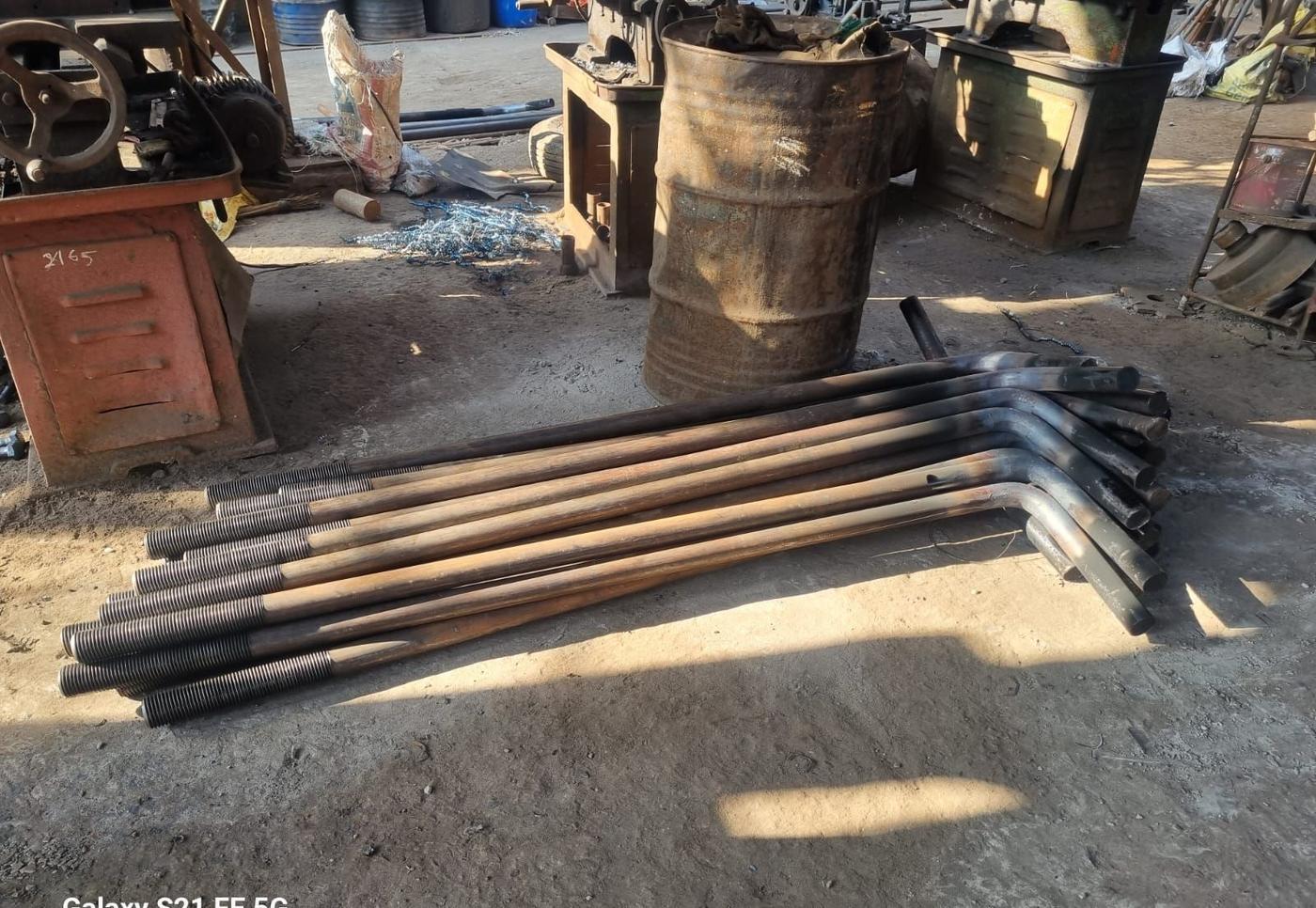
L type foundation bolts
A square 90° leg in place of the hook. Supplied up to M56 in property class 10.9, with the bend formed before heat treatment.
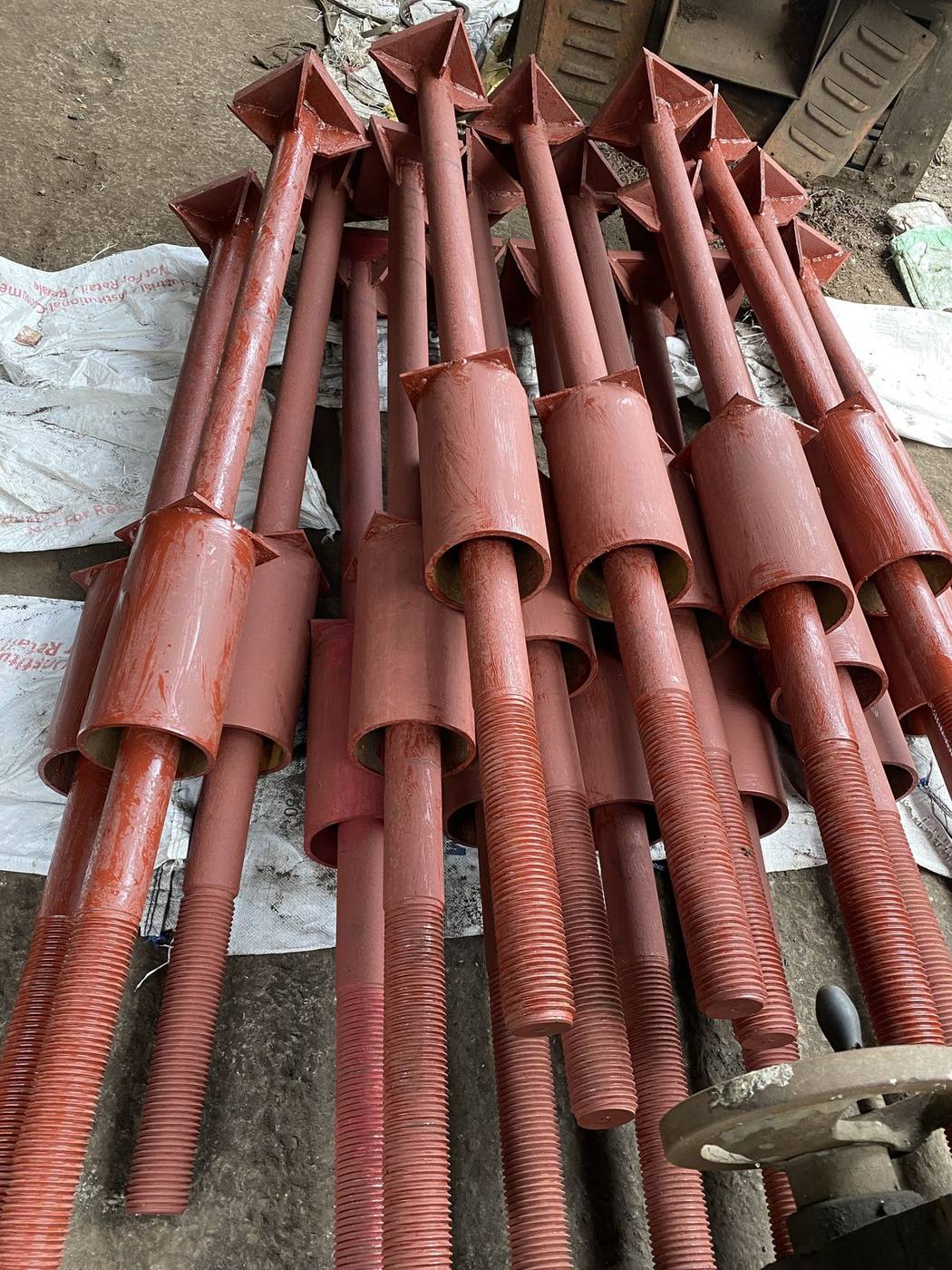
Welded plate assemblies
Rod with base plate, triangular stiffener gussets, pipe sleeve and tuck nut, fabricated in-house and supplied as one assembly.
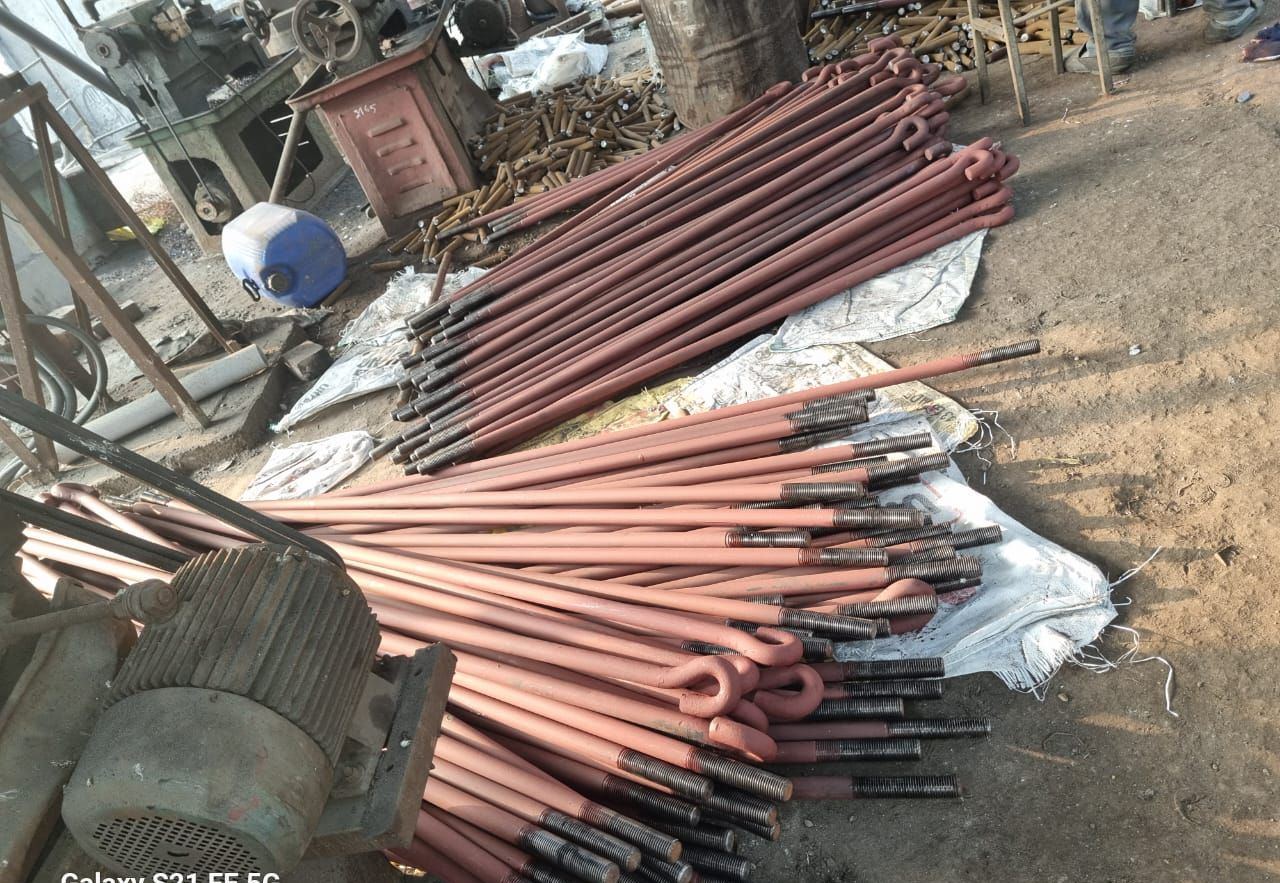
Eye-end anchor rods
Forged loop at one end, threaded at the other, so a bar can pass through the eye and tie the anchor into the reinforcement.
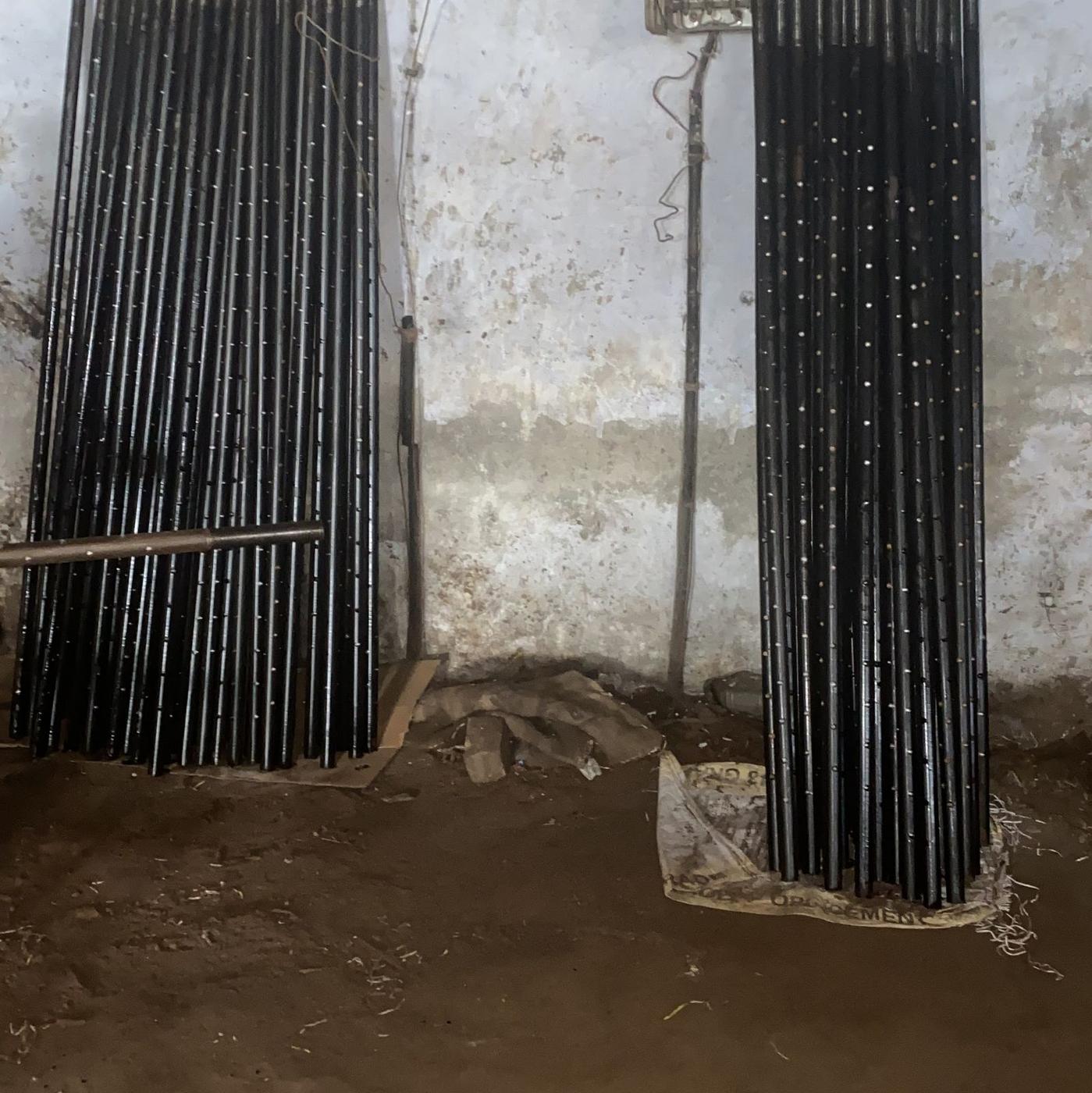
Special anchors to drawing
Made to the designer’s detail — for example rods with shallow blind pockets, about 5 mm deep, drilled along the shank so the concrete keys to the bolt.
Straight anchor rods and U bolts
Straight rods threaded one or both ends, with nut and plate washer at the embedded end, including anchor rods to ASTM F1554. U type holding down bolts with both legs threaded.
Manufacturing range
| Diameter | Up to 110 mm |
|---|---|
| Length | Up to 3750 mm in quantity |
| Material and grade | Mild steel; property classes 8.8 and 10.9, quenched and tempered |
| Threads | Metric coarse, UNC and BSW; rolled threads up to ø100 mm. Thread length at each end as per drawing — the two ends are often different |
| Standards | IS 5624, DIN 529, ASTM F1554, or the customer’s drawing |
| Assembly parts | Base plate (rectangular or circular), stiffener gussets, pipe sleeve, tuck nut, with matching nuts and washers |
| Finish | Self colour, black, red oxide primer or hot dip galvanised |
| Testing | Tested lot-wise at heat treatment, with samples from the same lot verified at a NABL-accredited laboratory. Test certificates supplied with the material |
Need the weight before you send the enquiry? Use our foundation bolt weight calculator for straight bolts and welded plate assemblies, with a weight chart from 12 mm to 110 mm.
Bent bolts in high tensile grades
Hardened steel does not tolerate bending, which is why bent anchors are usually offered only in mild steel. We form the bend first and heat treat afterwards, so the bar is never bent in a hardened condition and the properties develop across the whole finished part. That is how we supply J and L bolts in property classes 8.8 and 10.9.
Heat treatment is done in a pit-type furnace with the bolts hung vertically, which keeps long bars straight through the quench. The parts are through hardened, not case hardened.
Welded plate foundation bolt assemblies
We fabricate the complete assembly, not only the rod. The base plate is welded square to the rod and stiffened with triangular gussets. A pipe sleeve is welded at mid-section just below the thread, and where the drawing calls for it a tuck nut — a nut one size above the rod, bored oversize — is welded low on the shank as a positive stop in the concrete.
Customers normally specify the pipe by nominal bore and class. If your drawing also gives the outside diameter and wall thickness, we can quote faster.
Projects supplied
- Kanpur Metro — M32 welded plate foundation bolt assemblies in property class 8.8.
- High speed rail project — M56 L type foundation bolts in property class 10.9, supplied for the project.
- Road over bridge (ROB) foundations — anchor bolts with blind keying pockets drilled along the embedded length, to the designer’s detail.
More photographs of foundation bolts made here are in the product gallery.
What to send for a quotation
- Type — J, L, U, eye-end, straight, or welded plate assembly
- Diameter and total length, and whether the length includes the thread
- Thread length at each end, and the thread form
- Property class or steel grade, and the standard to test against
- For bent bolts: hook or leg length
- For assemblies: plate size and thickness, gusset size and number, pipe size and length, tuck nut if required
- Nuts and washers per bolt
- Finish and quantity
Send your drawing
A drawing or a marked-up sketch is enough for us to quote. We reply with price, weight and delivery.
Send enquiry WhatsApp +91 98763 35042Common questions
- What is the largest foundation bolt you manufacture?
- Up to 110 mm diameter, and up to 3750 mm long in quantity. Threads are rolled up to ø100 mm.
- Can J and L foundation bolts be made in 8.8 or 10.9?
- Yes. We form the bend before heat treatment, so the bolt is not bent in a hardened condition. We have supplied M56 L bolts in property class 10.9.
- Do you make anchor rods to ASTM F1554?
- Yes, anchor rods are made to ASTM F1554 as well as to IS 5624, DIN 529 or the customer’s drawing. State the grade and the thread length at each end in the enquiry.
- How is the weight of a foundation bolt worked out?
- On the nominal diameter over the full length of the bar, with the thread not deducted. Plate, gussets, pipe sleeve and tuck nut are added for an assembly. The foundation bolt weight calculator gives the figure itemised.
Related: Foundation Bolt Weight Calculator · Types of foundation bolts · HSFG and high tensile bolts · Pernos de anclaje (español)